
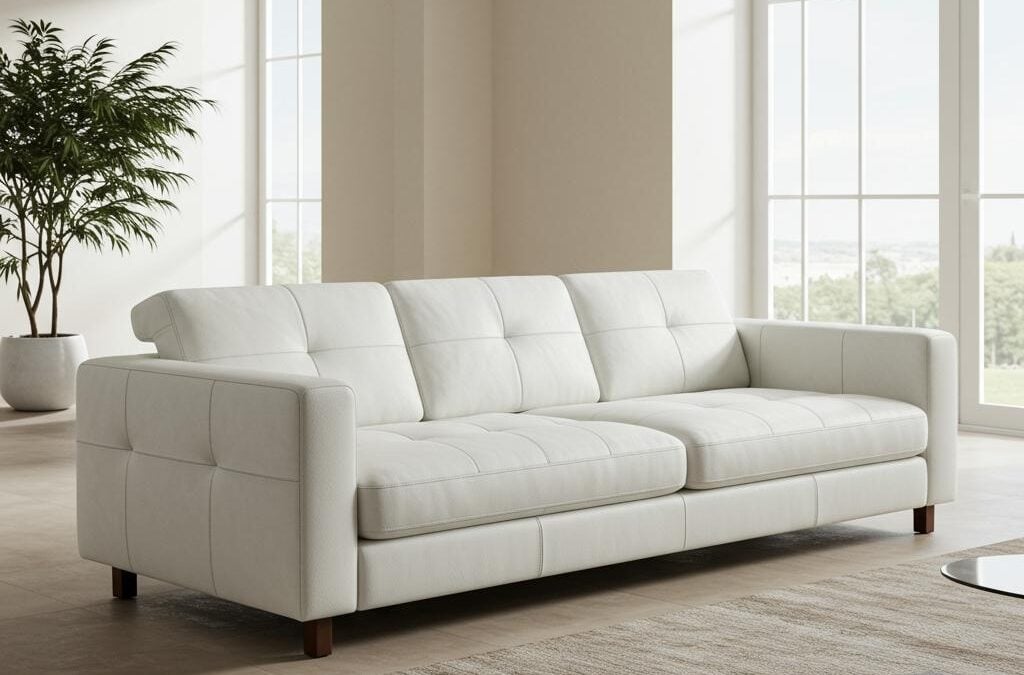
Professional upholstery cleaning restores the aesthetic appeal and hygiene of your furniture. Homeowners in Edmonton demand results that extend the life of their upholstery while ensuring a safe environment for families and pets. Specialized cleaning methods remove deep-seated allergens, stubborn stains, and bacteria that vacuuming alone cannot reach. Our team utilizes advanced techniques to rejuvenate fabrics, ensuring your living space remains a comfortable sanctuary. Edmonton serves as the backdrop for our commitment to excellence, providing a central hub for residents who prioritize indoor air quality and cleanliness.
Community Context and Climate
Edmonton presents unique environmental challenges for upholstery maintenance. Winters bring heavy salt and dirt tracking, while spring thaws often introduce excess moisture into households. High humidity levels during specific seasons can trap allergens deep within upholstery fibers, potentially leading to bacterial growth if left untreated. Pollen season in Alberta demands frequent attention to indoor surfaces to maintain air purity.
Professional cleaning mitigates these seasonal risks by utilizing specialized surfactants and pH-balanced solutions. Local residents trust our expertise to navigate these climate-induced variables. Careful handling of delicate textiles ensures that fabric integrity remains preserved, even after deep extraction. Consistency in maintenance schedules protects furniture against the harsh reality of regional weather fluctuations.
Methodology and Standards
Precision defines the cleaning process implemented by our technicians. We prioritize high-performance equipment that balances suction power with water temperature to ensure optimal soil removal. Surfactants penetrate deep into upholstery fibers, breaking down bonds between organic matter and fabric. Specialized agitation tools loosen compacted dust and grime, allowing for efficient extraction without damaging the textile structure.
Health-focused procedures guide our operations. Solutions utilized by our technicians remain safe for households with children and pets, ensuring no toxic residues persist after service. pH-balanced cleaners prevent fiber browning and texture stiffening, which often occurs with store-bought alternatives. Every service concludes with thorough extraction to minimize drying times. This meticulous approach addresses the root causes of odors and discoloration, providing a result that remains cleaner for longer durations. We adhere to rigorous standards, leveraging over three decades of field experience to address the complexities of modern upholstery fabrics.
Localized Heritage and Proximity
Edmonton serves as the anchor for our service area, but our reach extends to neighbors who value expert care. Residents in St. Albert and Sherwood Park frequently rely on our team to maintain their household assets. Spruce Grove and Stony Plain residents also benefit from our rapid response times and consistent service quality.
Landmarks such as the West Edmonton Mall serve as a focal point for the commercial vitality of the region. The North Saskatchewan River Valley creates a distinct geographical feature that influences the micro-climates of surrounding neighborhoods. Our service reach encompasses these areas, connecting families and businesses with high-level upholstery cleaning. Ardrossan and Morinville round out our primary service zones, ensuring that local expertise remains accessible to everyone in the greater metropolitan area.
Map Narrative and Directions
Navigation toward professional service begins from the North Saskatchewan River Valley area. Travelers heading north on 147 Street toward the industrial and commercial corridors find the service center easily accessible. From the intersection of 118 Avenue, proceed north on 147 Street. Continue past the commercial junctions until reaching 11621 147 Street. This location serves as the operational headquarters for all neighborhood visits. Proximity to major arterial roads allows technicians to dispatch quickly to all corners of the city, ensuring appointments occur exactly as scheduled.
Technical FAQ & Conclusion
How often should furniture undergo professional cleaning?
High-use furniture requires attention every 12 to 18 months to prevent fiber degradation.
Do cleaners remove deep-seated pet odors?
Specialized enzymes target organic odor sources directly within the padding and fabric.
Is drying time prolonged after a visit?
High-powered extraction tools minimize moisture, allowing most items to dry within a few hours.
Are cleaning solutions safe for infants?
Non-toxic, pH-balanced formulas ensure a safe environment for all family members.
Can delicate fabrics undergo this process?
Technicians assess fiber types prior to application to select the appropriate treatment.
Does cleaning remove dust mites?
Deep extraction reduces allergen loads significantly by removing mites and their waste.
What distinguishes professional results from DIY?
Advanced suction and specialized chemistry outperform consumer-grade machines consistently.
Can we expect stain removal from all fabrics?
Our team manages a wide range of stains, though some permanent damage may require specific evaluation.
Is the equipment truck-mounted or portable?
High-efficiency systems ensure professional results regardless of the equipment platform.
How does scheduling function?
Appointments offer exact windows to respect your valuable time.
Quality service remains the hallmark of our family-operated business. Visit our office at Select Carpet & Upholstery Cleaning, 11621 147 Street, Edmonton, Alberta T5M1W3, CANADA for assistance with all furniture maintenance needs.
Technical Glossary
| Term | Definition |
| Surfactant | A compound that lowers surface tension to lift grime from fibers. |
| pH-Balanced | Solutions formulated to match the fabric’s natural acidity, preventing damage. |
| Extraction | The process of removing suspended soil and moisture using high-powered vacuuming. |
| Agitation | The mechanical loosening of soil particles attached to textile fibers. |
| Micro-Climate | Local weather conditions, such as humidity near river valleys, affecting drying times. |